


What Is the Difference Between Colon Cancer Symptoms vs. Hemorrhoids?
Colon cancer and hemorrhoids can both cause rectal bleeding, but their symptoms may differ. Hemorrhoids often cause bright red blood, itching, swelling, or discomfort near the anus, while colon cancer may involve persistent bowel changes, abdominal discomfort, fatigue, unexplained weight loss, or blood in the stool. Our team at Phoenix Unified Surgeons can evaluate these symptoms and determine whether further testing may be needed. For more information, contact us or request an appointment online. We are conveniently located at 20333 N 19th Avenue, Ste 230 Phoenix, AZ 85027.
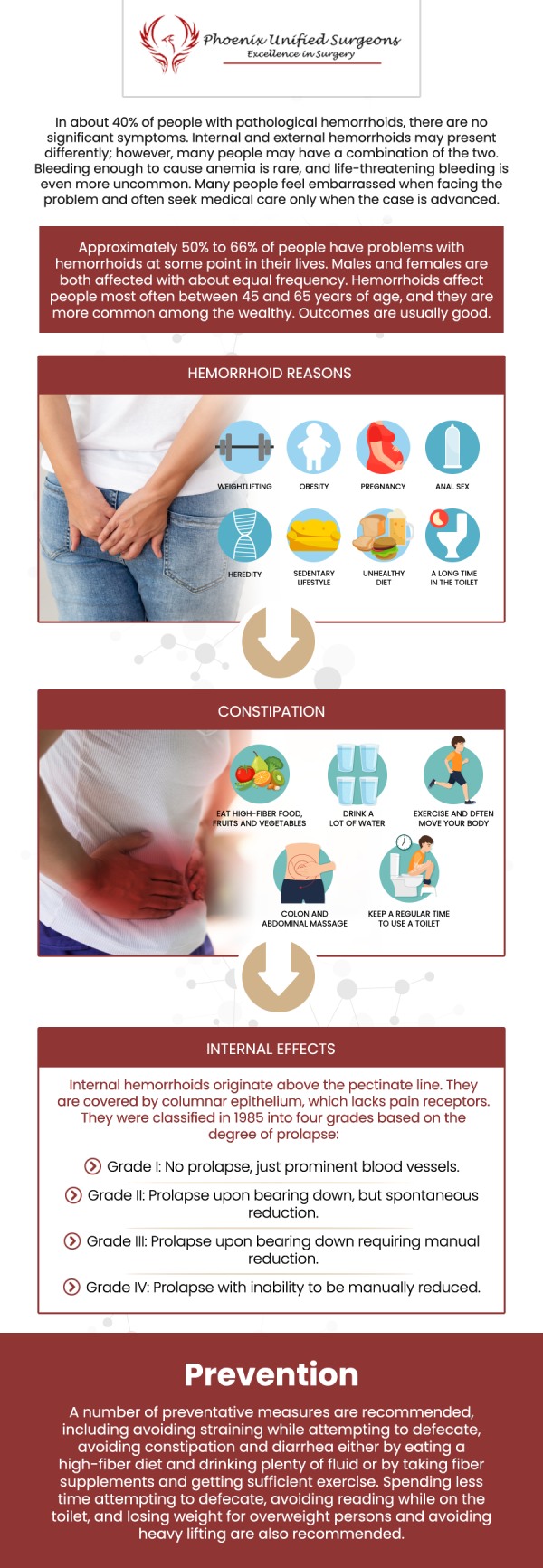
Table of Contents:
Can colon cancer and hemorrhoids occur at the same time?
How do rectal pressure and incomplete bowel movements differ between colon cancer and hemorrhoids?
Which diagnostic tests can distinguish hemorrhoids from colon cancer?
Where can I get evaluated for unexplained rectal bleeding in Phoenix, AZ?
What Symptoms Help a Board-Certified Surgeon in Phoenix, AZ, Distinguish Colon Cancer From Hemorrhoids?
At Phoenix Unified Surgeons, we frequently see patients concerned about rectal bleeding or changes in bowel habits, and it’s important to understand that both colon cancer and hemorrhoids can occur simultaneously. While both conditions may cause similar symptoms—such as rectal bleeding—they are distinct medical issues with different causes and require different treatment approaches.
Hemorrhoids are swollen veins in the rectum or anus, often resulting from increased pressure due to straining, chronic constipation, or pregnancy. Colon cancer, in contrast, involves abnormal cell growth in the colon or rectum that can form tumors and potentially spread to other parts of the body.
It’s possible for a patient to have hemorrhoids and also develop colon cancer, or for someone diagnosed with colon cancer to experience hemorrhoids as well. The symptoms can be confusing and may overlap; for example, rectal bleeding caused by hemorrhoids can sometimes mask or delay the diagnosis of colon cancer if not thoroughly evaluated.
At Phoenix Unified Surgeons, our priority is your health and peace of mind. We strongly encourage anyone experiencing persistent rectal bleeding, changes in bowel habits, unexplained weight loss, or abdominal pain to schedule a comprehensive evaluation. Early detection is crucial—especially for colorectal cancer, where timely diagnosis significantly improves treatment outcomes.
Our experienced surgical team uses advanced diagnostic tools, such as colonoscopy, to accurately identify the cause of your symptoms and recommend the most effective treatment plan. If you are over the age of 45 or have risk factors for colorectal cancer, regular screenings are especially important.
At Phoenix Unified Surgeons, we understand that symptoms such as rectal pressure and the sensation of incomplete bowel movements can be concerning. These symptoms are seen in a variety of conditions—including colon cancer and hemorrhoids—but their causes, associated features, and management differ significantly.
Colon Cancer
When a tumor is located in the rectum or lower colon, patients may experience persistent rectal pressure, urgency, or the sensation of incomplete evacuation (tenesmus). This happens because the tumor can partially block the bowel, disrupt normal stool passage, and irritate the rectal wall. Patients may feel the need to have another bowel movement even after just going. Other warning signs that may accompany these symptoms include:
• Unintentional weight loss
• Fatigue
• Changes in stool caliber (such as narrower stools)
• Unexplained anemia
• Blood in the stool (visible or hidden)
If you experience these symptoms, particularly in combination, it is important to seek prompt evaluation. At Phoenix Unified Surgeons, our experienced team is equipped with advanced diagnostic tools to identify and treat colon cancer, which is most successfully managed when detected early.
Hemorrhoids
Hemorrhoids are swollen veins in the lower rectum or anus and can also cause a sensation of rectal fullness or pressure, especially with larger or prolapsed hemorrhoids. The feeling of incomplete evacuation in this case is usually due to local swelling and irritation. Common symptoms include:
• Bright red blood on toilet paper
• Anal itching
• Swelling or pain during bowel movements
Unlike colon cancer, hemorrhoids do not cause changes in stool shape, unexplained weight loss, or systemic symptoms.
While both colon cancer and hemorrhoids can cause rectal pressure and the sensation of incomplete emptying, the underlying causes and associated signs are different. Persistent or concerning symptoms should never be ignored. At Phoenix Unified Surgeons, we offer expert evaluation, including colonoscopy and other diagnostic procedures, to distinguish between benign conditions like hemorrhoids and more serious concerns such as colon cancer. Our surgeons provide comprehensive care, from diagnosis to surgical and non-surgical treatment, ensuring you receive the best possible outcome.
At Phoenix Unified Surgeons, our team understands that symptoms such as rectal bleeding and changes in bowel habits can be concerning, especially since they can signal either benign conditions like hemorrhoids or more serious issues such as colon cancer. Because these symptoms often overlap, accurate diagnosis is essential.
Our initial approach involves a comprehensive medical history and physical examination, including a digital rectal exam. This allows our surgeons to detect external hemorrhoids or masses that may indicate a tumor. However, because some conditions cannot be identified through a physical exam alone, we utilize advanced diagnostic tools for further assessment.
Diagnostic Services at Phoenix Unified Surgeons:
• Anoscopy: Our surgeons perform anoscopy to directly visualize the anal canal and lower rectum. This quick, in-office procedure is useful for identifying internal hemorrhoids and other abnormalities in the lower rectum.
• Sigmoidoscopy and Colonoscopy: For a more complete evaluation, especially in patients with persistent or concerning symptoms, we offer both sigmoidoscopy and colonoscopy. Colonoscopy remains the gold standard for colon cancer detection, allowing our team to examine the entire colon, identify polyps or tumors, and take biopsies when necessary.
• Additional Testing: When appropriate, we may recommend stool tests for occult blood, imaging studies such as CT colonography, or laboratory evaluations to check for anemia and other indicators of disease.
If you are over age 45 or have a family history of colon cancer, our surgeons can guide you through routine screening and surveillance. We emphasize the importance of early and accurate diagnosis, as it is crucial for effective treatment and the best outcomes.
If you are experiencing rectal bleeding, unexplained changes in bowel habits, unexplained weight loss, or any other concerning gastrointestinal symptoms, don’t wait—schedule a consultation with Phoenix Unified Surgeons. Our experienced team is dedicated to providing compassionate, comprehensive care and will ensure you receive the most appropriate evaluation and treatment.
If you are experiencing unexplained rectal bleeding in the Phoenix area, it is essential to seek prompt medical evaluation. At Phoenix Unified Surgeons, our experienced team specializes in diagnosing and treating the underlying causes of rectal bleeding, providing comprehensive surgical and non-surgical care tailored to your needs.
While mild rectal bleeding can sometimes result from minor conditions such as hemorrhoids, it may also indicate more serious issues, including anal fissures, polyps, diverticular disease, or colorectal cancer. Our board-certified surgeons are skilled in advanced diagnostic procedures, such as colonoscopy and sigmoidoscopy, to accurately identify the source of your symptoms and determine the most effective treatment plan.
If your rectal bleeding is accompanied by severe pain, heavy bleeding, dizziness, weakness, or signs of infection, we recommend seeking immediate medical attention at the nearest emergency department. For less urgent but persistent symptoms, you can contact Phoenix Unified Surgeons directly—no referral is necessary. We work closely with primary care providers and gastroenterologists in the Phoenix area, ensuring seamless coordination of your care.
Don’t delay evaluation—early diagnosis is key to effective management and peace of mind. To schedule an appointment or to learn more about our services, call Phoenix Unified Surgeons or visit our website.
At Phoenix Unified Surgeons, Dr. Debora J. Fox, MD, MBA, FACS, FASCRS and the team are highly experienced in evaluating and diagnosing conditions that affect the colon and rectum, including colon cancer and hemorrhoids. We understand how concerning rectal bleeding and related symptoms can be, and our team is committed to providing comprehensive, compassionate care for every patient in the Phoenix area.
Our surgeons consider your age, personal risk factors, and family history. Colon cancer risk increases with age, especially after 50, and is higher in those with a family history of colorectal cancer. If rectal bleeding is accompanied by concerning symptoms or you fall into a higher-risk group, our team at Phoenix Unified Surgeons may recommend further diagnostic testing, such as a colonoscopy, to ensure an accurate diagnosis and prompt treatment.
At Phoenix Unified Surgeons, we prioritize your health and peace of mind. Our thorough evaluation process—tailored to each individual—helps us distinguish between benign conditions like hemorrhoids and more serious concerns such as colon cancer. If you are experiencing rectal bleeding or any changes in your bowel habits, don’t wait. Contact or schedule an appointment at Phoenix Unified Surgeons for personalized diagnosis and care from trusted surgeons in Phoenix, AZ. We are conveniently located at 20333 N 19th Avenue, Ste 230 Phoenix, AZ 85027. We serve patients from Phoenix AZ, Sun City AZ, Peoria AZ, Surprise AZ, Glendale AZ, Scottsdale AZ, and surrounding areas.
Check Out Our 5 Star Reviews



Additional Services You May Need
▸ Colon & Rectal Surgery
▸ Gallbladder Surgery
▸ Colonoscopy
▸ Wound Care
▸ Hernia Repair
▸ General Surgery
▸ Robotic and Minimally Invasive Surgery
▸ Appendectomy
▸ Colon Repair/Resection
▸ Lipoma & Cyst Removal
▸ Endoscopy and Colonoscopy
▸ Abdominal Pain
▸ Colon surgery for Diverticulitis
▸ Colon surgery for Colon Cancer
▸ Hemorrhoids
▸ Anal Fistulas
▸ Anal Pain Surgeries
▸ Colostomy Avoidance Surgery
▸ Fecal Incontinence Surgery
▸ Crohn’s Surgery
▸ Ulcerative Colitis Surgery
▸ TIF Procedure
▸ Colon Fistulas
▸ Groin Hernia
▸ Inguinal Hernias
▸ Hiatal Hernia
▸ Colon-Bladder Fistulas
▸ Colon Diverticulitis
▸ Hiatal Hernia Surgeon
▸ Gastroesophageal Reflux Disease
▸ Colon and Rectal Cancer Surgical Management
▸ Incisional Hernia
▸ Giant Hernias
▸ Skin Cancer
▸ Breast Cancer Screening
▸ Open and Nonhealing Wounds
▸ Incisionless Hiatal Hernia Repair
▸ Lipomas and Common Skin Growths
▸ Surgical Second Opinions
▸ Feeding Tube Access Including PEGs and G Tubes
▸ Upper GI Endoscopy Care
▸ Board-Certified General Surgeons, Colon and Rectal Surgeons
▸ Colon and Rectal Surgeon vs. Gastroenterologist
▸ Colon-Vaginal Fistulas
▸ Port Placements for IV Access
▸ Colostomy Reversal
▸ Abdominal Wall Hernia


 Send Text
 How May I Help You?